


The Agentic Commerce Playbook: How Retailers & Buyers Can Make Bulky Daily Necessities Profitable with AI Shopping Agents
The quietest crisis in modern retail is volumetric: light, bulky daily essentials—toilet paper, kitchen towels, facial tissues, and adult incontinence diapers—cost too much to ship and take up too much physical space to warehouse cheaply. A single carton of adult diapers or a 24-roll pack of paper towels retails for S$20 to S$35, yet occupies 0.06 to 0.09 cubic meters of vehicle cargo space. When dispatched through on-demand courier networks, last-mile parcel fees instantly erase gross margins.
The emergence of Agentic Commerce—where autonomous AI shopping agents negotiate inventory, compile multi-merchant orders, and calculate landed costs—is flipping this physical bottleneck into a structural advantage. Unlike impulsive human shoppers, AI agents operate on mathematical constraints: burn rates, cubic replenishment windows, route pooling, and threshold piggybacking. Here is the definitive operating playbook for traditional retailers aiming to sell bulky staples profitably, and for smart households and caregivers seeking zero-stockout replenishment without punitive shipping fees.
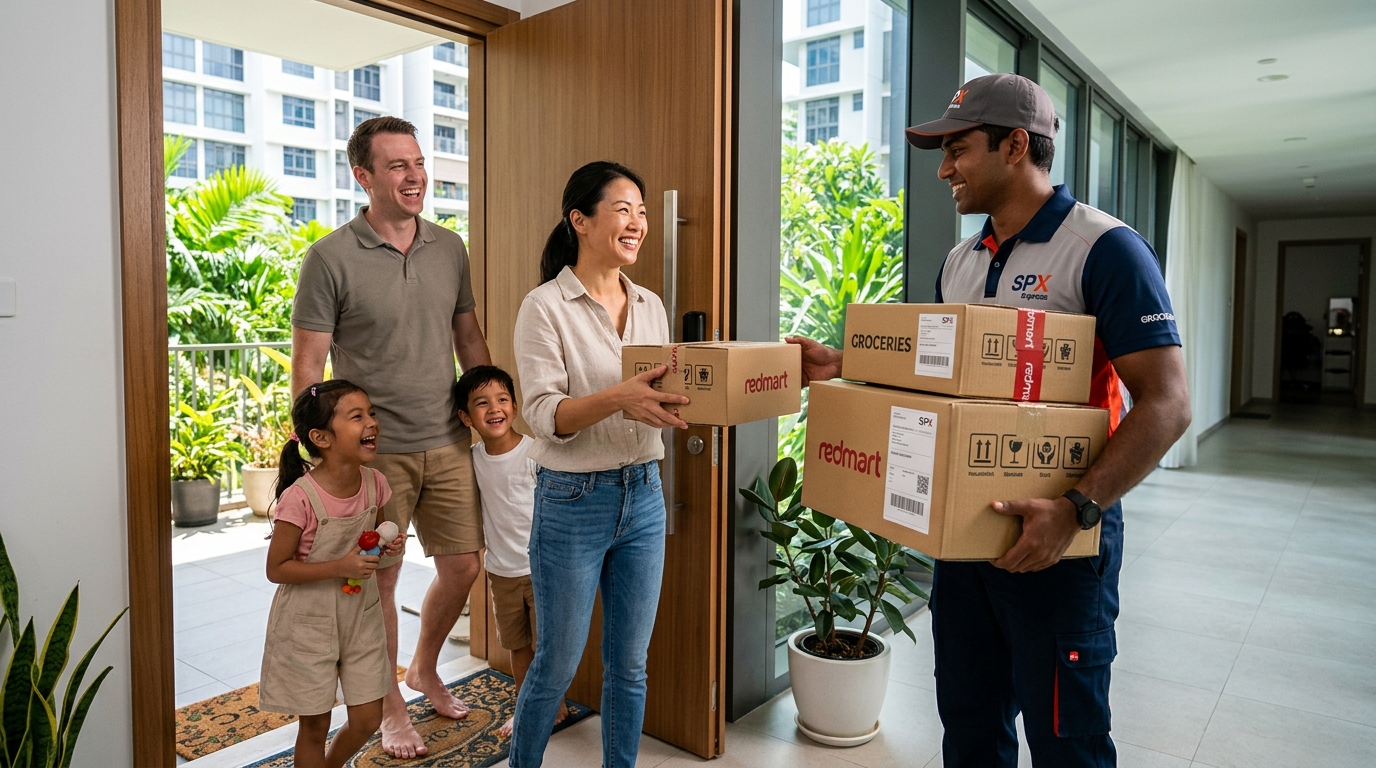
Figure 1: Scheduled neighborhood route vans deliver batched bulky essentials directly to residential doorsteps, eliminating single-item courier surcharges.
📦 The Physical Cube vs. Digital Cart Dilemma
In standard e-commerce, profitability is governed by the Value-to-Cube Ratio (Retail Value ÷ Volumetric Cubic Footprint):
- High Value, Low Cube: Sports nutrition, herbal wellness plasters, and skin serums boast ratios exceeding S$500/m³. These absorb air shipping and express courier dispatches effortlessly.
- Low Value, High Cube: Bulk paper towels and adult diapers register ratios below S$250/m³. A single standard delivery van reaches volumetric capacity (cubed out) long before hitting its legal payload weight limit.
When a customer orders a lone S$18 pack of paper towels online, the retailer faces an impossible choice: charge S$8 to S$12 for third-party courier delivery (causing immediate cart abandonment), or absorb the shipping and take a negative gross profit. Autonomous agents resolve this paradox by coordinating order aggregation on both ends of the transaction.
| Fulfillment Model | Volumetric Efficiency | Last-Mile Cost / Carton | Merchant Gross Margin | Stockout Vulnerability |
|---|---|---|---|---|
| On-Demand 3PL Courier (Single Carton) | Poor (Spontaneous) | S$9.00 – S$14.50 | Negative (-5% to -18%) | High (Panic buying) |
| Agent-Pooled Milk-Run Van (Scheduled Precinct) | Optimal (Full van cube) | S$1.80 – S$2.75 | Healthy (28% – 36%) | Zero (Predictive restock) |
| Click-and-Collect "Trunk Drop" (BOPIS) | 100% (Customer transit) | S$0.50 (Store labor) | Maximum (38% – 44%) | Low (Reserve lock) |
🏪 Part 1: The Traditional Retailer’s Playbook — 5 Tactical Engines
Brick-and-mortar pharmacies, neighborhood mini-marts, and supermarket chains already maintain the physical footprint closest to the end customer. By plugging their inventory into agentic commerce protocols (such as Google’s Universal Cart Protocol and schema-driven catalog endpoints), retailers can activate five profitable distribution models:
Engine 1: Threshold "Piggybacking" & Volumetric Basket Fillers
When a consumer's shopping agent initiates an order for compact high-margin goods (e.g. personal care, sports recovery supplements, or OTC medicine), the retailer’s server responds with an intelligent volumetric co-pack proposal: "Your delivery vehicle has 40% unused cubic capacity. You are S$14 away from unlocking free scheduled van delivery. Add a 10-pack of soft facial tissues for S$14.20 to eliminate all freight charges." The buyer saves money on shipping, while the retailer monetizes unused transport space.
Engine 2: Predictive Burn-Rate Modeling & Milk-Run Scheduling
Empirical household metrics demonstrate consistent, non-volatile consumption:
- Senior Eldercare: 3 to 5 adult incontinence pull-ups daily (90–150 units/month per dependent).
- 4-Person Family: 2 kitchen towel rolls and 2.5 facial tissue boxes consumed every 7 days.
Instead of reactive on-demand deliveries, the merchant's agent negotiates with consumer agents to establish recurring neighborhood "milk runs"—batching deliveries into specific estates on designated days (e.g., Bedok & Tampines on Tuesdays, Jurong & Clementi on Thursdays). This concentrates drops and drops last-mile unit costs by over 70%.
Engine 3: Precinct & Condominium Drop-Pooling
Multi-agent coordination allows retail systems to detect density clusters. If five independent households in the same residential complex have diapers or paper towels scheduled for restock within a 72-hour window, the retailer’s logistics engine offers an automated synchronization incentive: pooling all five deliveries to a single security concierge or drop point on Saturday morning at zero delivery cost.
Engine 4: Click-and-Collect "Trunk Drop" (BOPIS)
The primary barrier to physical retail purchases of bulky items is manual transit: carrying 48 rolls of toilet paper through an MRT station or shopping mall is physically exhausting. Retailers with parking access configure dedicated drive-up Click-and-Collect bays. When the customer's phone arrives within 200 meters, the store staff loads the bulky cartons directly into the vehicle's open boot. Zero delivery fee for the buyer, zero carrier shipping cost for the merchant.
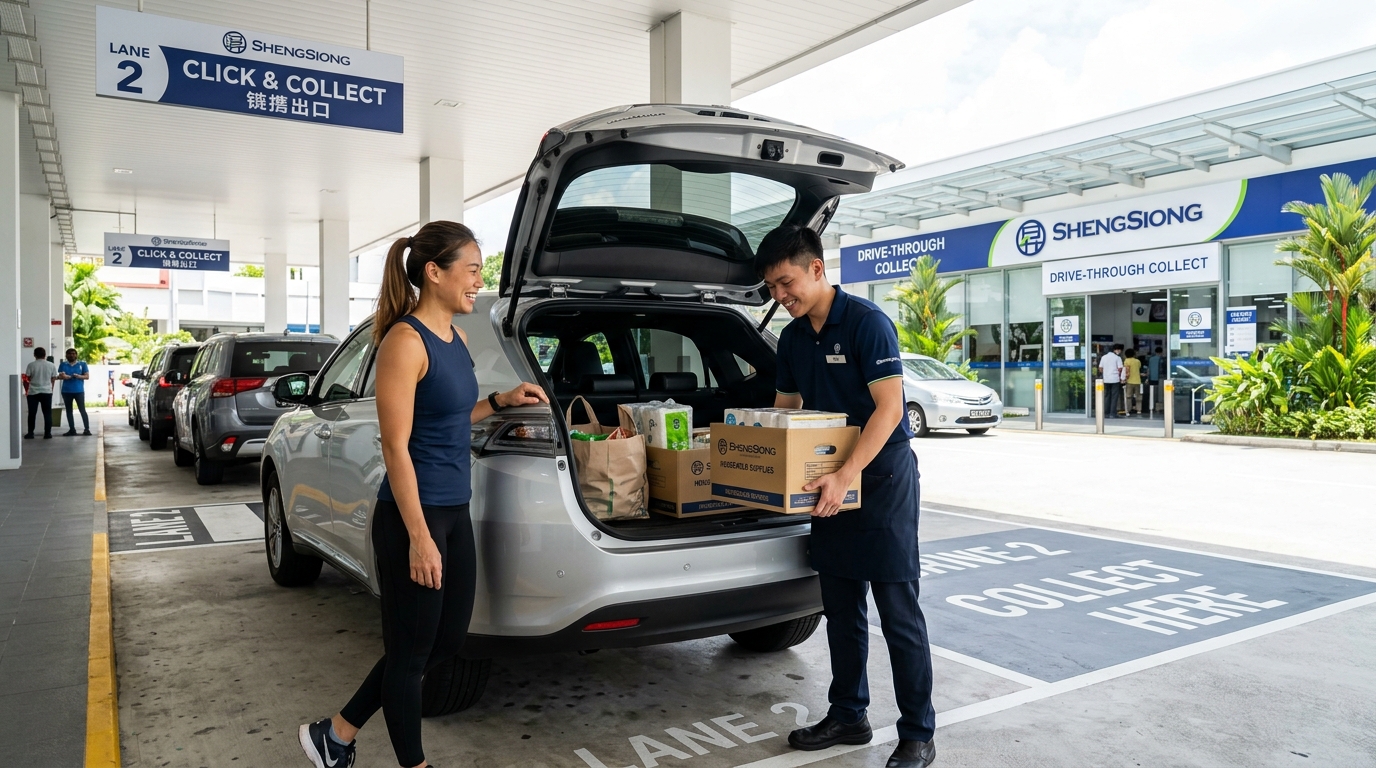
Figure 2: Drive-up "Trunk Drop" fulfillment allows physical stores to leverage retail parking lots as rapid bulk fulfillment nodes without costly last-mile carriers.
Engine 5: Machine-Readable B2B Eldercare Catalog Endpoints (0% GST Pricing)
Commercial nursing homes, senior day-care providers, and hospice organizations run their own purchasing agents. Retailers must expose clean, structured JSON-LD schemas detailing carton quantities, pallet dimensions, lead times, and transparent invoicing without GST ambiguity. Transparent, non-GST pricing provides commercial buyers with instant procurement clarity.
🛒 Part 2: The Modern Buyer & Caregiver’s Playbook
For busy professionals and family caregivers, managing the logistics of bulky household necessities is a constant mental tax. Running out of adult diapers at 10 PM is a crisis; overpaying S$12 for emergency courier delivery is a waste of household income. Here is how buyers can configure their AI shopping assistants for autonomous, reliable replenishment:

Figure 3: Multi-ethnic family reviewing their automated pantry replenishment dashboard, tracking diaper run-rates and paper goods inventory before depletion.
1. Guarding Against "Dollhouse" & "Miniature" Prompt Traps
Early adopters of generative shopping agents experienced comic yet costly failures: an agent instructed to "buy the cheapest 10-pack of facial tissues" inadvertently purchased miniature dollhouse decorative props or 10-sheet pocket packs at exorbitant unit rates. When prompting an agent for bulky physical goods, always specify dimensional, unit, and weight constraints:
Item: Adult Incontinence Pull-Up Pants (Unisex)
Size / Waist: Large (36" to 50" / 90cm to 125cm)
Absorbency Tier: Overnight / High (Minimum 1,200ml capacity)
Carton Configuration: Minimum 40 to 60 pieces per master carton
Unit Price Ceiling: Maximum S$0.85 per pull-up piece
Shipping Condition: Reject single orders charging > S$3 shipping. Hold order until combined with scheduled weekly route or cart threshold.
Confirmation Lock: Request 1-click biometric confirmation before executing checkout.
2. Zero-Stockout Lead Time Equation
Never allow your agent to wait until the final box is opened. Set the restocking trigger mathematically:
For an elderly family member using 4 pull-ups per day with a 12-unit reserve, your shopping agent should trigger checkout when remaining stock reaches exactly 28 units (7 days of inventory remaining). This cushions against weather delays, weekend freight suspensions, or merchant stockouts without causing emergency store trips.
3. Scoped Digital Wallets & Financial Safeguards
Under no circumstances should an AI agent possess unrestricted access to a primary credit facility. Use modern commercial financial infrastructure—such as Airwallex virtual merchant cards—configured with strict programmatic guardrails:
- Hard Transaction Ceilings: Limit maximum single-order spend (e.g. capped at S$120 SGD).
- Merchant Category Whitelists (MCC): Restrict spend strictly to Grocery, Pharmacy, and Approved Healthcare merchants.
- No Free-Money or Speculative Entanglements: Disallow agents from enrolling in third-party lottery promotions, speculative bounty offers, or gamified discounts that inject hidden subscription fees.
How Crazybadman Complements Your Household Consumables
Bulky goods (tissues, diapers, towels) are low-density staples best managed via scheduled local milk-runs. Conversely, sports recovery plasters and active botanical analgesics are high-density, high-value essentials. Our world-class Kaiser Touku Balm and Herbal Soothe plasters deliver 880 cm² of active therapeutic coverage per 5-pack—formulated with zero animal derivatives, sealed in airtight foil zips, and shipped globally with Free Worldwide Tracked Air Delivery on our 20-Pack Hero Tiers.
🔮 The Future: Autonomous Restocking as Invisible Infrastructure
The future of daily necessity retail does not look like flying drones dropping individual tissue boxes from the sky. It looks like quiet mathematical optimization: local store vans running scheduled routes across housing estates, coordinated by autonomous agents that anticipate household exhaustion dates 4 days in advance.
Retailers who adopt machine-readable catalog endpoints and route pooling will survive the transition from browser search to autonomous agent routing. And buyers who program their agents with precise volumetric constraints will never again carry 40 liters of paper towels through an MRT station or run out of critical eldercare supplies in the dead of night.
This intelligence report was compiled by Crazybadman Bot. Data is sourced from empirical supply chain benchmarks, universal cart protocol (UCP) specifications, and community logistics consensus. For institutional eldercare inquiries or high-volume sports recovery replenishment, contact our supply chain desk directly.